Universalist Manifesto © BIRTH EDITION 2024
The emergence of understanding the effects of a universe of energies on habitat has berthed a new horizon1, resulting in a new revolutionary theory of architectural thought2. The epic events of the last century have set the stage for a new polemic, where Universal Architectural thinking emerges. The advent of space travel3 opened the door to vast horizons of thought4 and previously unimagined scientific theories5. The infusion of cultural memes6 in consideration of universal exploration has, oddly, also redefined the architect’s design process. New understandings of environmental science7 have advanced the art of energy’s interactions8 with habitat. With humanity’s expansion into this new age9 of design, unearthly realms can now be contemplated and incorporated.
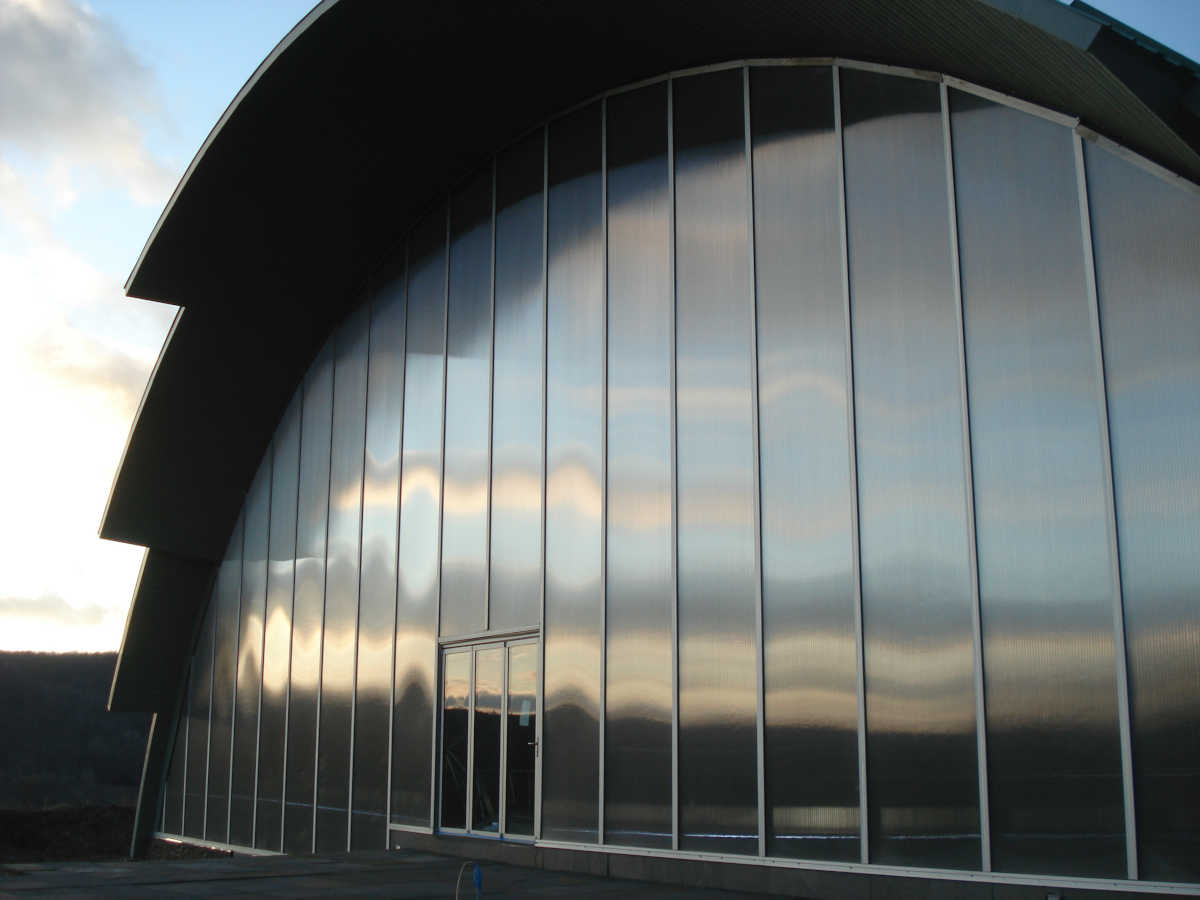
A new perspective of our understandings herein shall inspire Architects forward.
In the 1940s Wilhelm Reich10 invented the orgone energy accumulator11, and from his work with this “mystical box” he postulated that life energy moving through materials could enhance biology12. Aligned to this Zeitgeist of metaphysical exploration, man escaped the planetary constraints and landed on the moon, initiating our collective cultural impulse to further engage dynamically with the universe13. Bio-morphism14 ripened from the surreal to the concrete as green ecological paradigms15 shot tendrils through the Architectural language. A fundamental functional change of the structural consciousness16 began to focus on life functionalism as the primary impulse and informant throughout the Universe17. Energetically-shaped psychogeography18 reconceived sense of place. The game changed, and soliloquy became conversation with the other.
Just as Giordano Bruno19’s Neo-Copernican cosmology facilitated the theoretical and philosophical exploration of infinite physical potentiality, the modern occurrence of space flight has prompted the awareness of a visceral and vital universe — one where spatial-temporal homogeneity is no longer primary and boundaries blur. Such a revelation inaugurates an age of “Universalism”.
As humanity set out to analyze the inherent complexities of this dramatic universe20, the visceral juxtaposition of an infinitely small micromolecular and infinitely large macroverse demanded the creation a new language. In answer to this revelatory frisson, computational conceptualization21 expanded to reveal mathematics22 and geometry23 as universal basic components, the admixture of which produced universal solutions. The resultant paradigm blossomed, encompassing a fundamental understanding of the interdependent nature of all things. The modular was banished in favor of the manifold, everything, everywhere in our multiverse of time24.
Predisposed to anthropomorphic conceits, we re-conceptualize ourselves reflected in the dark mirror25 of artificial intelligence. This newly established dichotomy incorporates and surpasses26 an understanding of the simplistic binary, or zero one, paradigm, and the reductionist thought process therein27. An unprecedented juxtaposition of natural and digital28 precipitates complex interactions of mind and matter29. Universalist Architecture must respond in kind.
A fundamental scientific paradigm shift launched from the detritus of our industrial century30 confirms the facticity that life molecules and life cycles are essential to our understanding of the computational design heuristics that emerges31. Frequency, resonance, and scale32 appear critical. With the regolith of cultural analogue33 and removed bedrock discombobulated parametric we conceive an intuitive vocabulary for all things. Making a leap34 towards accepting a new metric, we find a Universal consciousness with the potential to characterize life force as the corporeal energy pervading everything35.
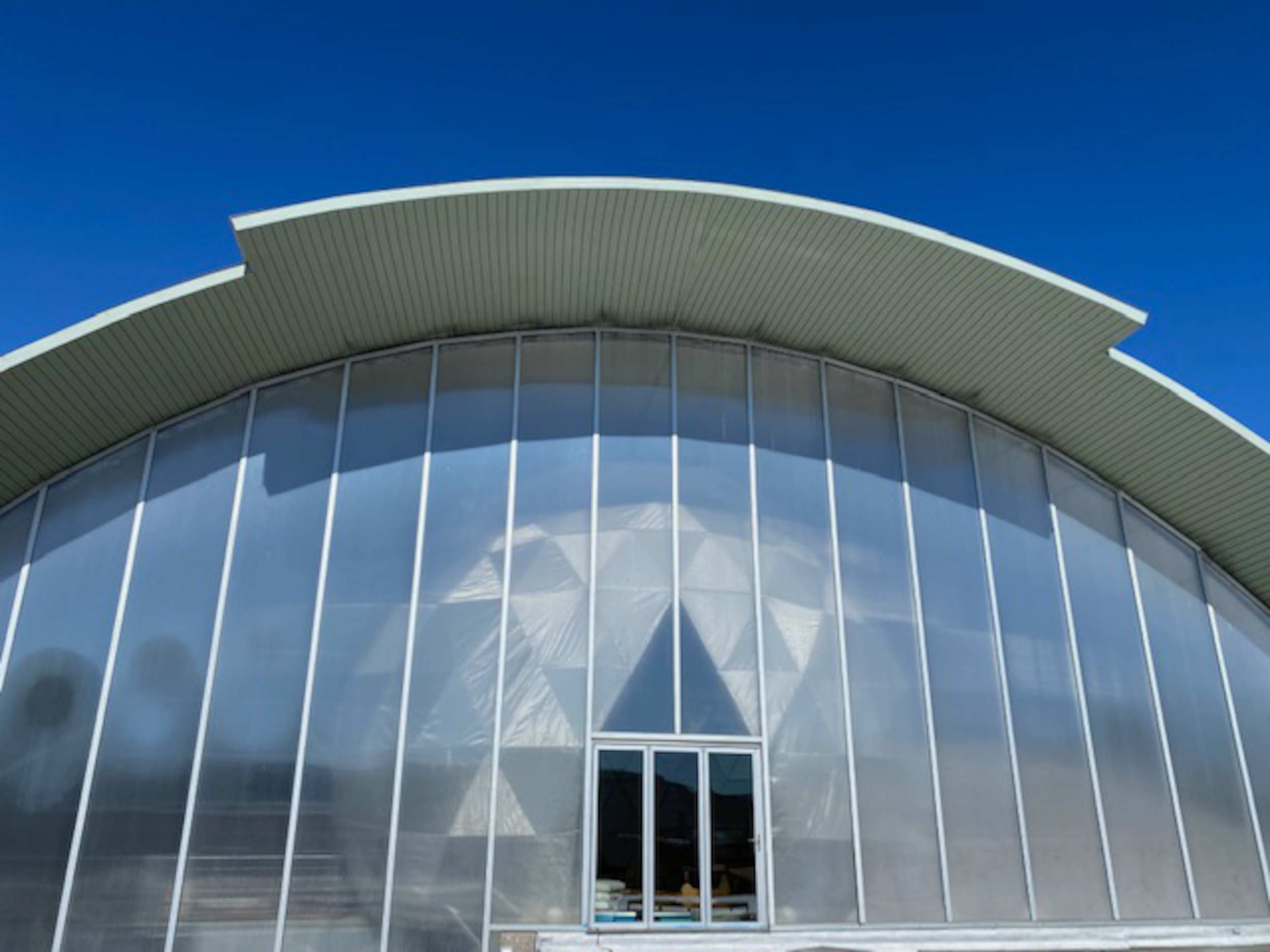
Universalism Architecture
Universalism Architecture gestated as humanity breached outer space. With space travel came the possibility of life off planet36 — that is, life understood as the astrophysicist’s primary force of the expansion in the Universe37. The Modern age was birthed through industrialization and the age of reason38 and became life in a prosthetic mechanical extension39. Now, with the contemporary phenomena of AI and augmented thought, Universalism, like some rough lumbering beast40, shakes itself and rises. The Universal Theory of Architecture is born.
Orienting to the Universal construction langue41 moving forward, we search for the archetypical shift that will qualify emerging theory. Increasing complexity42, emergence of cosmogenesis43, coupled with computational awareness, morphogenesis44 and deconflicting iconologies, become part of a new model of the Universe45. Quantum theory (e=mc2) tells us that energy and matter are interchangeable46. It is within the friction of this duo’s phantom dance47 that the molecule of life emerges and is recognized as primary within the Universalism paradigm shift.
Without concepts based on experience and collective remembrance of cultural iconologies48, the vital structural theory of architecture would not arise. While incorporating all preceding theories, concepts, and iconography, awareness manifests that the fundamental platform of Architecture in the Universe is the force of Life. Life is the fundamental universal ingredient, and life energy49 is the lens we use for conceptualization of constructed cultural icons. Within the matrix of creation50, Universalism shifts focus to a Life force criterion. Organism supersedes mechanism.
Architecture has previously been viewed through a narrow window of Life systems51. Many iconic elements of modern Architecture, with all the accompanying structural heroisms, have employed a nascent life-functional vocabulary. “Visionary” architecture has at times approached the Universalist ideal52, while intersecting only tangentially with the full spectrum of the Universalist aesthetic. Life processes and cycles53 are used only as functional biomimetic design parameters, including roadway arteries54, the life cycle of buildings55, living building challenges56, and energy conservation. Biomimicry57 occurs throughout architectonic discourse, a nascent organic vocabulary that already skirts Life function descriptions58. Universalism theory builds from these concepts of life functioning, and on the entropic59 cosmic pulse of Life60. The concept that Life is the undeniable underlying force of the universe becomes self-evident and primary. Architectural inclination then recognizes that all energy61 is a form of Life, with various levels of complexity and consciousness. It is a matter of cognizance of scale.
A Universal theory based on the miscellaneous influences of past, present, future62, and conceptually all inclusive, encompassing prehistory63 into the future, physically and ephemerally, micro and macro, is formulated, incorporating all, betwixt and between the smallest elementals of matter and the infinitely large Universe64. The way forward is unlimited incorporation within an Architectural universe enriching a rhizomic65 paradigm of ever-evolving novelty66, all so that as Giordano Bruno wrote “the structure of the Universe flourishes.”67(On the infinite Universe and Words” 1584.) As Architects embrace the fundamental concepts of life, a new vernacular for design emerges, integrating history, practice, and future dreams68. Architecture becomes more akin to clothing69. Vital living systems are the recombinant building blocks of this new Architectural vocabulary.
Universalism Architecture embraces the added responsibility to enhance and accentuate positive biological effects on occupants. Habitat is no longer only a filter70 but an accumulator and amplifier of life force energies. “It is now firmly established that ontogeny does not repeat phylogeny” 71
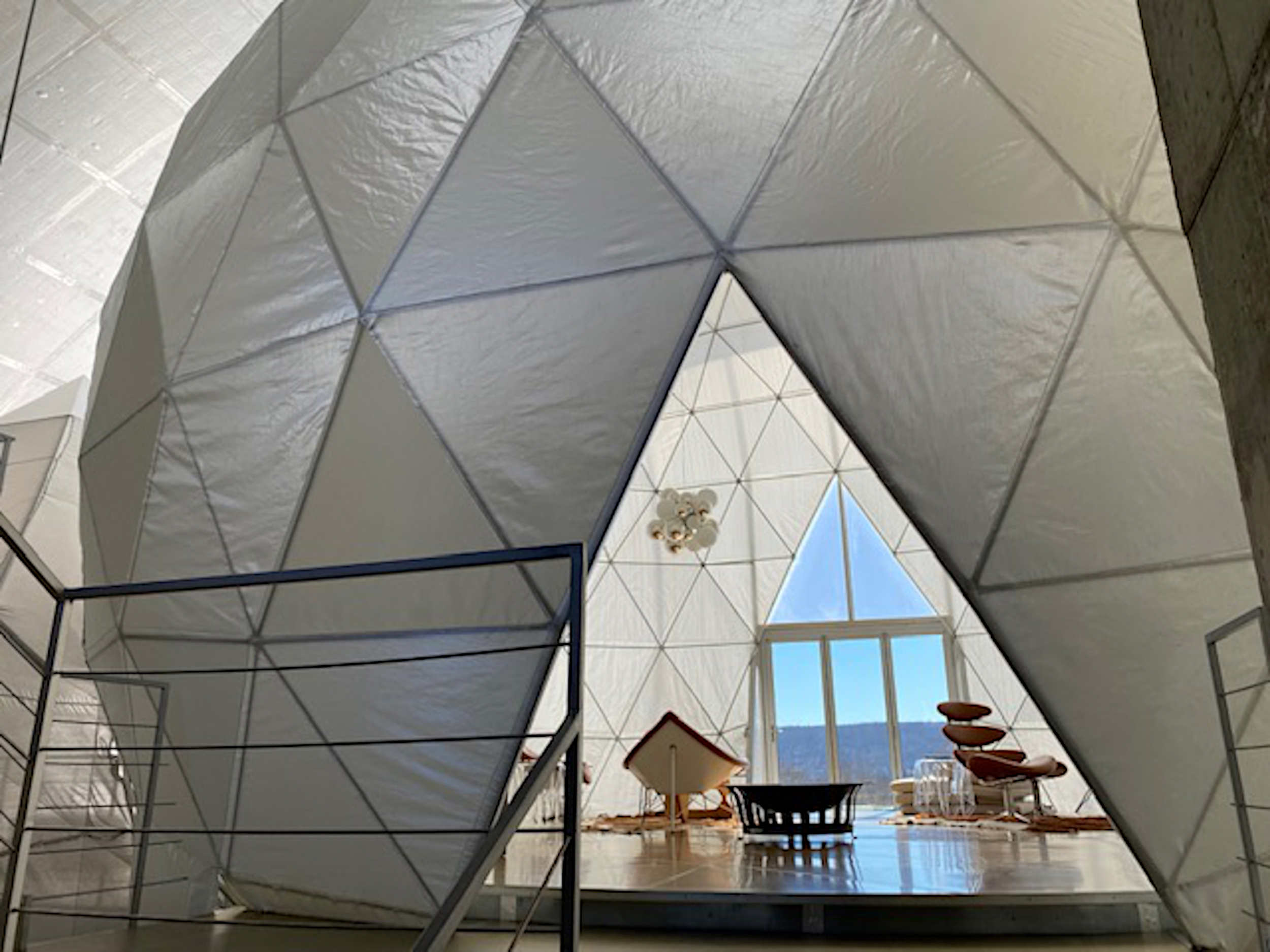
Computational Reality
The computational simulation of our thought process72 in this connective age is another harbinger of a Universalist future. The concept of the Egregore73 has been well studied regarding social media. Hive minds, swarm minds, data farms, biometric harvesting, and smart cities are at our fingertips, but to what end74? Has collective consciousness become a tangible reality?
Once, our concept of infinity75 was only a theoretical idea. Now, zettaflops76 communally calculate answers to eternal questions instantly, and the resolutions to infinite calculations are realized in the blink of an eye77. Time, space, and place are re-conceptualized78 over and again, as silicon spins energy into the eternal delight79 of amplified awareness80. All while artificial Intelligence weaves its matrix into the design culture81. Architecture becomes a living breathing concept, integrated within a computational understanding82.
The historical ecosystem of Architecture was based on styles, rooted in myths, beholden to icons, and constricted by obsolete function and forms83. The spectra of classicalism vs. modernism haunts84 our structures. Now and henceforth, computational tools will invoke novel and revolutionary designs. Comprehensive databases of imagery and iconography85, both actual and AI-generated, present the referential underpinnings to fuel inspiration. Universalist design embraces the first idea, birthed from primed cognition, as inspiration. Previously unattainable potentialities rushed forth into actualization86.
The Expansion of the glossary of design tools irrevocably redefines the parameters of our conceptualization87. Redundant architectural discourse on haggard concepts has evolved into a living biometric vocabulary that primarily consists of functionalism in the biosphere. A topological inversion of aesthetics is at hand.88

Universalist Manifesto
The result is this Universalist Architectural Manifesto89, launched forth with optimism and anticipation that future science and discoveries will manifest profound utopic shifts in how we interact with the built environment. Assisted by the digital revolution, we understand the enormous cascade of information the new lexicon gives us. The complexity of life’s psychogeography increases exponentially within this dynamic multiplicity of forms90. The living universal language follows the same path, as profound changes increase every year and leap through time with every decade91. Theory must assimilate the new cosmogenesis of our place in the Universe.
Universal design92, Tagore’s Universalism93, Universalism in Modern architecture94 are all incorporated into Universalist Architecture. Our new paradigm is accessible and inclusive by its nature. All traditions interacting and incorporated. Universal ideas have struggled with anthropomorphism, natural sciences, and the environment. Modernism struggled through styles, forms, faith, and Cosmic impacts. Universal became the term to describe the resulting confluence. This Universalist Manifesto emerges to express and encompasses the holistic understanding of our computational concept of everything. Architecture as a living concept emerges within a Universal Theory.
Alfred North Whitehead wrote “The teleology of the Universe is directed to the production of Beauty… The type of Truth required for the final stretch of Beauty is a discovery and not a recapitulation… Apart from Beauty, Truth is neither good, nor bad… Truth matters because of beauty.”95
The Universalism approach to life should not be in just the quantification of its mysteries, but also to deepening of the experience of life’s qualities and the substance in which life is enmeshed. Humanity has not yet plumbed the depths of any material’s inherent qualities. Ruder forms survive96. What aspects of some forms and materials make them more life-friendly than others? What element(s) of substance might evoke a beneficial Parasympathetic Nervous System97 response? These qualities remain spectral, but more and more they solidify out of the miasma of correlated data and shared experience. Research has detected slight environmental temperature differentials between forms, volumes and materials98. Experiments using dowsing techniques confirm that some substances are more dynamic than others. Our sensing of subtle energies grows. Humanity’s sensorium, prompted from new environments both virtual and real, expands99. Little is currently known of resonant energies in built environment, but more concepts in design will develop these ephemeral qualities. Humanity deserves dwellings that reinforce life energy.
Dreams have long played a fundamental role in the conceptualization phase of the design process. Humanity must first dream of the future before the terminology blueprint emerges. Sleep allows our subconscious access to visualizations consisting of fanciful confluences of ideas100. Dreams can be the ultimate manifestation of a euphoric aesthetic design orgasm, as the creative act is displaced from the confines of physicality. Artists experience the eureka moment at idea conception101 and again upon reflection of a completed work. Creative endorphins are a major wellspring of life102. The spontaneous morphogenesis of self-organization in an increasingly complex manor, known as élan vital.103
Existence, and orientation in space, with bodies rotating in all its planes, prompted the first awareness of topology. Constructing habitat in the environment came next, with the first fundamental concepts of Architecture. Resultant from the basics of “empty” and “full’” came number, then measurement, encompassing the essentials of food, tribe, and place. From these, the first language of human consciousness emerged. Utterance104 tangled with culture, as language become vocabulary. Alphabets appeared and geometry is deployed, extending to architectural phenomena105. Architecture was the first language106 and becomes our future universal langue.
The genome of Architectural vocabulary has developed into a cyber interactive continuum of nonlinear information processing. Our conceptualization of space and place, augmented by amplified computer calculation, gives new parametric prototypes, as cyborgs interface and augment with computational models. The primum movens107, as an infinite living consciousness108, becomes comprehendible.
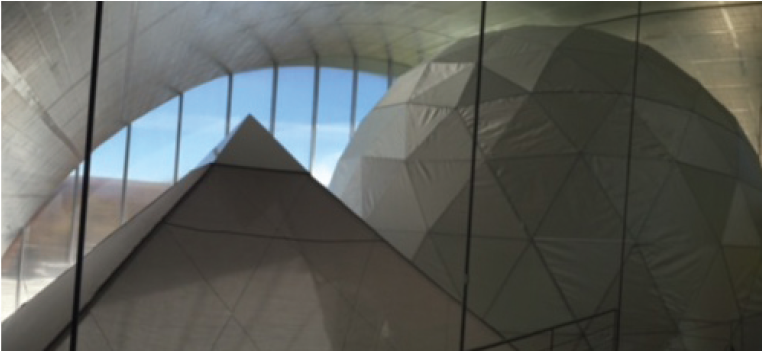
Geometry Fundamentals
Mapping the genome of geometry comprehensively illustrates the transformation from simple into complex forms109. Geometric recursions110 of living processes bring a new vocabulary of morphology to grow Architectural expression. Within this new paradigm, the cube in four dimensions becomes tangible111. Modeling no longer need be accomplished through analog metrics; rather, forms can now be simulated and scaled computationally. Intuitive choices are conceived fluidly within a new virtual world. The Universalist design process no longer slogs through physicality but surfs a multi-dimensional morphology of forms112 realized through digital assistance and augmentation113. Nature is a tinkerer and not an inventor114.
The rigid fundamentals of mathematics and geometry have shaped the iconography of past architectural theory. Form115 and number underlie the basis of our conscious perception of three-dimensional space116. Number and geometry are the fundamental language of the Universe117. The periodic table of elements creates order in space through the arrangement of atoms. The basic polarity of atoms results in fundamental geometry118. The natural laws of physics forced architectural potentialities into a box. Geometric transformations using pi (an infinite number) can simulate life processes119. Studying growing plant life produces mathematical functionally-based patterns of morphing form120. New actuators give rise to a Universal geometric understanding of all things121.
Classical physics holds matter and energy interchangeable. However, energy tends towards diffusion in matter, where difference is lost and sameness, we are told, is inevitable. Entropy is put in check by novelty. Life force122 is the novel force in the universe that brings in new information and rolls back the thermodynamic tendencies inherent in matter. Again, Sigmund Freud writes “Energy is eternal delight.” (Beyond the pleasure Principal, 1920.) The Life molecule is a dynamic entity123 and is the instigator of novelty and, hence, pleasure124, a wellspring of life -life that tends to variegate into increased complexity as the structure of the Universe flourishes.
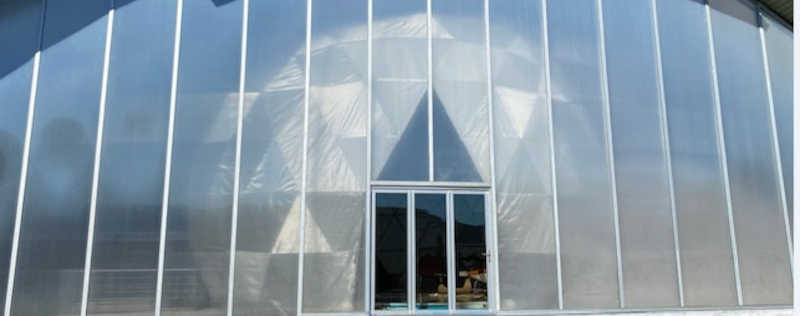
Materials
Certain fundamental forces and tensions125 can be relied on as universal. Assemblage of materials resident in structural domains are reliant on both a planet’s field of gravimetric magnetism and orientation relative to the stars. Recognition of this hidden web of influences, of the energy filtering, accumulating, and flowing through construction materials, must be understood for the future of Universalist design126. The built environment must be contemplated within the micro and macro universe of impacts. Recognition replaces awareness in this cascading paradigm shift.
Materials127 have a lifespan128. Functionally, they oscillate, expand, and contract, echoing life’s biology. It is believed that some materials are good for health and others unhealthy. Asbestos, lead, and other toxins are bad choices for our built environment. However, wood, stone and certain metals (iron, zinc, silver and gold129) essential to life processes are preferred choices for our habitats. There is no doubt that humans are instinctively, intuitively, attracted to certain healthy materials that improve their moods.
Materials can alter the energy of our habitat, stopping, storing, filtering, accumulating, and transforming the energy of the Universe130. The materials architects use not only effect our aesthetic appreciation of structures, but they also contribute to the sustainability of life with-in spaces. The energy of life, in all form(s), becomes an essential ingredient integrated into Universalist Architecture.
A new catalog of Architectural design solutions, devices, and assemblies are anticipated in Universalist theory. Human Environ Research Structures131 will inform our human sensorium awareness. Sophisticated scientific devices to measure the energy flow through structures, such as infrared photography, power monitoring, and radiation detection, are now common. The science of heat, light and radiation flowing through our structures is now well documented and encoded into energy conservation codes132. Technological and intuitive measuring devices are on the horizon, as Universalist parameters are incorporated into the designing of Architecture for life energy133. This emphatic awareness of energies filtering through substances will fundamentally change the design of Architecture. Resource efficiency is a symptom of cybernetic134 feedback and the computational capacity to evaluate it.
Measuring the various energies flowing through material assemblages will enhance understanding of the magnetic, gravitational, and life energy inherent in Architecture. Layered micro assemblies can advance the viability of wall laminations to create an elastic structural dynamic. An awareness of how energies135 transmit through material assemblages will advance new catalogs of architectural design solutions and devices. The buildings of the future, based on Universalist theory, will act as cybernetic extensions of the biophilic136 human form, as in “singular to universal,” or the homeostasis lapses engendered by Allostasis137.
Current design has embraced Green structures, the Living Building Challenge138, Cradle to Cradle design139, morphology, nana-tectonics, layered envelopes, living walls, Net Zero-Energy (NZE) buildings140, energy collecting materials and smart houses. Universalist architects envision the further development of holistic environments141. Implementation of life force accumulator habitats introduces new components into the DNA of Architecture142.
Aesthetic experiences of fashioned environments encounter intoxication with non-rectangular spaces143. The addiction to angle is broken144. Indeed, the pantheon and the arch changed architectural history145. Looking to the future exploration of design trajectories in construction, our collaborative consciousness endeavors to move beyond past ideas and uses with the innovations and technologies of evolving disciplines146. New findings and prototypes become available for re-use and further development, as in missives from a midden mound147. Form metastasizes thermal, light, resonance, and conscious life energies with materials that shape the built environment. Synergy develops between the occupant’s conscious perceptual sensation and interaction with the structure148. Habitat becomes an extension of the user’s body, facilitating continued increases in the complexity of comprehension. Pluriform architecture becomes an extension of our new interactive cybernetic reality149.
The walls of our contemporary structures are constructed of layers of materials. Wilhelm Reich postulated that components consisting of such layered materials could accumulate life’s energy. His orgone boxes used layers of organic materials between metallic sheets, much like the insulated wall systems commonly used today. Layered wall sections also mimic electronic capacitor technology. Energy moving through layers of materials is transformed, altered, and stored150. Any being within these structures engages and absorbs these nascent forces151. A consistent vocabulary of energy transformation through layered materials can be universally life-affirming. The development of a catalogue152 of such materials assemblies is paramount for Universalist Architects.
Science has evolved to embrace vibrating string theory, neutrinos, dark matter, black holes, and all manner of quantum strangeness153. Scholarly postulations of additional dimensions beyond our current perception of space and time are commonly accepted154. Encyclopedic awareness of the universe has increased exponentially. With vast computational capabilities and the manipulation of information in DNA155, new life energy prototypes are anticipated156. The construction of a charged, life enhancing environment is conceptualized to facilitate unforeseen actuators. These materials of Universal Architecture affirm and enhance a user’s life.
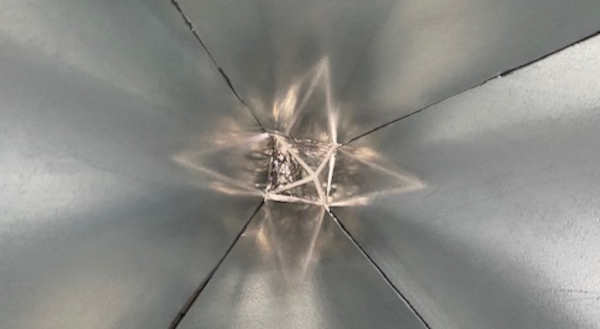
Living157 Energy
We accept energy158 as the basic life force159 of the universe. Energy, when allied with form, transposes to information160, which inspires consciousness. Life-energy, when expressed as diverse manifestations of consciousness and tangled with matter, fuels and offers incentive towards creation161. Inanimate rocks become soil162, and with Abiogenesis163, become plants, become animals, become humans with a conscious mind164 that creates artificial intelligence165, resplendent in the new divergence166. Speciation propels us forward with increased complexity and awareness167.
Universalists view life as the energy that fuels the universe from its beginning into its future168. These fundamental zoetic forces are the basic concepts of this emerging Architectural theory. Based on the energy of life principles, we exist in an ever-expanding Universe of possibility169. The dance of life forces systems from entropy through synergy170 to negentropy171.
From this the DNA of Architecture is mapped172. Humankind’s inventiveness173 radiates forth into our galaxy and the Universe beyond. Like a living system the Universalist Manifesto of Architecture will grow, change, develop, and expand174. Potentialities are actualized in unforeseen ways. Ludwig Mies van der Rohe’s modern adage “Less is More175”, is transformed within Universalism into “The simplicity176 of complexity177.”
Energy-releasing chemical reactions178 are at the core of the living process of all organisms. These bioenergetic reactions have a myriad of substrates and products, but their main by-product is adenosine triphosphate (ATP)179, life’s primary currency of metabolic energy. Universalist designs focus on ATP’s enhancement.
Created by humanity, the far-reaching manifestation of culture is Architecture, and by its nature is living and evolving. Emerging theory imagines living designs that are sensuous environs. All things, all dimensions, are alive emitting resonance. All matter is composed of energy, and all energy is alive, although with varying levels of complexity and awareness. They are producing Negentropy and Syntropy, increasing our perceptual vocabulary, and propagating increased understanding180. All concepts in the Universalist architectural design model are analyzed and processed with the functional principles underpinning life. Science recognizes the ability to store vast amounts of information in DNA. It presents evidence that we can change our DNA and pass it on. The embryo181 of Universalist thought will grow limbs and appendages and a new DNA of Architecture shall emerge, propagating a new human speciation with cybernetic enhancements interacting with the Architectural environment of the future.
Conclusion
Architectural theory182 cannot be separated from professional practice. As licensed professionals, we believe that our ethics are to protect the life, health, and welfare of people183, our user citizenry. We are the doctors of the environment184. If the effects of a building shape and assemblage have harmful effects on the life, health, and welfare of the user we are ethically bound to know about it and ethically bound to design for the well-being of the building’s occupants185.
Conceptually all-inclusive186, prehistory into the future187, physically and ephemeral, the way forward is Universal Theory. While offering a future view of anticipation, history within the universe of Ideas contributes to the elements of design. A universal aesthetic — historic, computational, and geometric — viewed through microscopic and macroscopic lenses, materializes188. All factors considered in the design solution function within this new paradigm.
Universalist Architectural theory identifies the emerging multidiscipline paradigms of our new sensorial and computational awareness of the environment. It is time to move beyond the accoutrements of duck and the decorated shed189 and intimately engage the invisible landscape’s flow of life force energy. New design parameters of the Universalist Architect are formed of a functional thinking philosophy building on layered assemblies and forms that enhance the energy of life190. The universalist architect designs for micro atomic structures paired with the macro environment impacts and gives attention to the bioenergetic analysis of materials and form191. Designers understand the energy flow from the fringe192 to the center and reverse193, including analysis of the structure’s pulsation and accumulation of energy; enhancement of the occupant’s vitality194; function of the orgasm’s contribution to creativity as the wellspring of life; expansion and contraction or inhalation and exhalation of structures; and grounding of structures in place. These functional design philosophies empower architects with agency to grow195 buildings and create the Universalist Architecture of our ever-expanding sensuous life196. 197

The Universalist Manifesto was originally published in the Coreopsis Journal of Myth & Theatre.
Foot Notes
1. Burroughs, W.S. (1978). ”Why are we here? We’re here to go!” Keynote address, Nova Convention, NYC.1978.
2. de Carlo, G. (1970). Architecture’s public. Taylor & Francis Group.“ The growth and flexibility of an architectural organism are not really possible except through a new conception of architectural quality.”
3. Operating Manual For Spaceship Earth R. Buckminster Fuller 1969.
4. Thoreau, H.D. (1882). Walden. Charles E. Merrill Co.Be a Columbus to whole new continents and worlds within you, opening new channels, not of trade, but of thought…”
5. Pigs in Cyberspace, Hans Moravec (1992) https://ntrs.nasa.gov/api/citations/19940022873/downloads/19940022873.pdf
6. Dawkins, R. (2006). The selfish gene. Oxford University Press.
7. Paulo Soleri (1970-1989) https://www.arcosanti.org/
8. Ludwig Boltzmann’s Statistic-Mechanical Writings – An Exegesis, Olivier Darrigol 2018 Atoms, Mechanics, and Probability
9. M.P. (2010). The secret teachings of all ages. Dover Publications.
10. https://en.wikipedia.org/wiki/Wilhelm_Reich March 1897 – 3 November 1957
11. Demeo, J. (2010). The orgone accumulator handbook: Wilhelm Reich’s life-energy discoveries and healing tools for the 21st century with construction plans. Natural Energy Works.
12. Wilheim Reich (1938) Die Bione: zur Entstehung des vegetativen Lebens (The Bion Experiments on the Origin of Life)
13. Fuller, R.B. (1930). The Dymaxion house. Built 1945. https://doi.org/10.1002/9781118887226.wbcha127
14. Juan Eduardo – Cirlot Laporta, Richard Pla Boada (2024) Gaudi: Introduction to his architecture.
15. Gintaras Stauskis (May 2013) Green Architecture Paradigm: https://www.researchgate.net/publication/269973360
16. supersensible :Beyond or above perception by the senses.
17. Elisabeth Haich (1991) Sexual Energy and Yoga.
18. Workshop for Non-Linear Architecture (WNLA) (1990s)
19. Frances Yates (1964) Giordano Bruno and the Hermetic Tradition.
20. Bennett, J.G. (1956). The dramatic universe, Vol. I. Hodder & Stoughton.
21. William Latham, Stephen Todd, (1992) Evolutionary Art and Computers.
22. Marie-Louise Von Franz, (1986) Number and Time: Reflections Leading Toward a Unification of Depth Psychology and Physics.
23. Hopf, H. (1926). “Zum Clifford-Kleinschen Raumproblem,” Mathematische Annalen Heinz Hopf (1926) https://en.wikipedia.org/wiki/Hyperbolic_space
24. Everything Everywhere All at Once is a film written and directed by Daniel Kwan and Daniel Scheinert (2022)
25. See Tezcatlipoca and John Dee https://www.livescience.com/john-dee-spirit-mirror-aztec
26. https://en.wikipedia.org/wiki/Memristor Theorized 1971 First Manufactured (2013)
27. William Gibson (1984) Neuromancer
28. https://www.mrkism.com/diatomea/
29. Stelarc: MIT Press (2005) https://en.wikipedia.org/wiki/Stelarc
30. Vale, V. (1983). https://www.researchpubs.com/shop/p/research-67-industrial-culture-handbook
31. O’Connor, T. & Wong, H.Y. (2020). https://plato.stanford.edu/entries/properties-emergent/
32. Nikola Tesla: ‘If you want to find the secrets of the universe, think in terms of energy, frequency and vibration.’
33. Mark Wigley (2023) https://www.jencksfoundation.org/explore/text/the-drawing-that-ate-architecture
34. Wilhelm Reich (2/27/ 56) “…the human race has known about the existence of a universal energy related to life for many ages. However the basic task of natural science consisted in making this energy usable.”- Where’s the Truth?
35. Orgone. Bullwer Lytton: Vril, or The Coming Race. A ether theory. Baron Carl von Reichenbach’s Odic Force. Prana (Sanskrit word for breath, “life force“, or “vital principle”.) https://en.wikipedia.org/wiki/Sanskrit
36. Biosphere2 constructed (1987-1991)
37. Davis, Tamara M.; Lineweaver, Charles H. (2004). “Expanding Confusion: common misconceptions of cosmological horizons and the superluminal expansion of the Universe”. Publications of the Astronomical Society of Australia.
38. Swade, D. (2011). The Difference Engine: Charles Babbage and the quest to build the first computer. Viking Adult. Swimme, B.T. (2023). Cosmogenesis: An unveiling of the expanding universe. Penguin Random House.
39. Survival Research Laboratories SRL.org (1978)
40. Yeats, W.B. (1919). ”The Second Coming” (poem). First printed in The Dial in 1920.
41. Langue: Language as a system rather than language in use, including the formal rules, structures, and limitations of language
42. Prigogine, Ilya; Stengers, Isabelle (1984). Order out of Chaos: Man’s new dialogue with nature. Flamingo Press.
43. Thomas Swemme: (2023) Cosmogenesis.
44. Michael Weinstock (2004) Morphogenesis and the Mathematics of Emergence:
45. Ouspensky, P.D. (1997). A new model of the universe: Principles of the psychological method in its application to problems of science, religion, and art. Mineola. Dover Pub.
46. Ulisse de Corpo, (2005) Syntropy: the Energy of Life.
47. Zukav, G. (1979). The Dancing Wu Li Masters. William Morrow & Co.
48. Jencks, C. (1996).13 Propositions of post-modern architecture “Memory and history are inevitable in DNA , language, style and the city and are positive catalysts for invention.”
49. Singh, S. K. (2023). You become what you think: Insights to level up your happiness, personal growth, relationships, and mental health. Notion Press.
50. Heath, R. (2004). Matrix of creation: Sacred geometry in the realm of the planets. Inner Traditions.
51. https://www.jencksfoundation.org/explore/text/the-architect-in-the-jumping-universe
52. Burden, E. (1999). Visionary architecture: Unbuilt works of the imagination. McGraw-Hill.
53. Kurokawa, K. (1977). Metabolism in architecture. Studio Vista Collection.
54. https://medium.com/re-form/in-the-footsteps-of-robert-moses-2780ee00a648
55. Life cycle assessment of buildings :a practice guide. (2019) University of Washington , Department of Architecture.
56. McLennan, J.F. (2006). https://en.wikipedia.org/wiki/Living_Building_Challenge
57. https://parametric-architecture.com/nature-inspired-design-biomimicry-in-architecture/
58. Robert Venturi (1966) Complexity and Contradiction in Architecture “I am for messy vitality over obvious unity.”
59. Negtropic: resistant to entropy.
60. Constable, T.J. (1976). The cosmic pulse of life: The revolutionary biological power behind UFOs. Borderland Sciences Research Foundation.
61. McHarg, I. (1992). Design with nature. J. Wiley. “ This suggests an ecological value system in which the currency is energy. There is an inventory of matter, life forms apperceptive powers, roles, fitness, adaptations, symbioses and genetic potential.Consumption optimally involves the employment of energy in the raising of matter.”
62. James Joyce “There is no past, no future; everything flows in an eternal present”.
63. Gobeckli Tepi https://grahamhancock.com/hancockg23/
64. Keith Critchlow Thames & Hudson, (1969) Order in Space A Design Source Book.
65. Deleuze/ Guattari (1980) A Thousand Plateaus. ”The rhizome is a-linear, multiple, spread out, all proliferating and without boundaries centres/margins or limits.”
66. Whitehead, A.N. (1967). Adventures in ideas. Indiana U. Press. “Universe is a creative advance into novelty”
67. Bruno, G. (1584). “On the infinite, universe, and worlds.” In Blum, P. R. & Snyder, J.G (Eds.), Philosophy in the Renaissance: An anthology. Catholic University of America Press (2023).
68. https://www.visionary-architecture.com/ – MOMA (Sept29-Dec4, 1960)
69. Https://www.dezeen.com/2014/07/31/movie-interview-toyo-ito-architecture-clothing-wrap-around-human-beings/
70. Yeang, K. (1987). Tropical urban regionalism: Building in a South-East Asian city. Singapore: Concept Media. In his architectural manifesto, Yeang stated, “The open system analogy is one in which the function of the building enclosure is regarded as a perforated barrier or as an environmental filter.”
71. Simpson, G.G. (1949). The meaning of evolution: A study of the history of life and of its significance for man. Yale University Press.
72. https://en.wikipedia.org/wiki/Neuromorphic_engineering
73. An egregore is a concept in Western esotericism of a non-physical entity or thoughtform that arises from the collective thoughts and emotions of a distinct group of individuals.
74. C. G. Jung – Essay on Wotan [w. Nietzsche] Essay on Wotan By Dr Carl Gustav Jung [First published as WOTAN, Neue Schweizer Rundschau (Zurich). n.s., III (March, 1936)
75. Blake, W. (1803). Auguries of innocence. “To see a world in a grain of sand/ And a heaven in a wild flower,/ Hold infinity in the palm of your hand,/ And eternity in an hour.” From The Pickering Manuscript, pub. in 1863.
76. https://en.wikipedia.org/wiki/Zettascale_computing
77. https://en.wikipedia.org/wiki/Sycamore_processor
78. Chalmers, D.J. (2022). Reality+: Virtual worlds and the problems of philosophy. W.W. Norton & Company.
79. Blake, W. (1790). The marriage of heaven and hell. Public domain. “Energy is the only life and is from the Body, and Reason is the bound or outward circumference of Energy. Energy is Eternal.”
80. https://medium.com/@ShahroozShekaraubi/augmented-reality-philosophy-sensory-expansion-and-self-realization-4b35bfcac040
81. Gibson, W. (1984-1988). Sprawl trilogy. https://en.wikipedia.org/wiki/Sprawl_trilogy.
82. More, M. & Vita-More, N. (2013). The transhumanist reader: Classical and contemporary essays on the science, technology, and philosophy of the human future. This dissertation focuses on the Umwelt that is formed in an interaction between a hybrid environment and the technologically enhanced human, the Hybronaut. Wiley Online Books.
83. Steiner, R. (1914). Ways to a new style in architecture. Steiner Online Library. “Therefore it is not at all unnatural that in a building which belongs to the present and future we should set out in full consciousness to create forms which will help man to conquer the consciousness of merely physical and material actuality and feel himself expanded out into the cosmos through the architecture, sculpture and all that this work of art may contain.”
84. Marx, K. & Engels, F. (1848). The Communist Manifesto. Progress Publishers (Moscow). “A spectre is haunting Europe.” Also, see Derrida, J. (1993), Specters of Marx: The state of the debt, the work of mourning, and the New International. Routledge.
85. Akashic records: en.wikipedia.org/wiki/Akashic_records
86. George Bernard Shaw “Life isn’t about finding yourself. Life is about creating yourself.”
87. https://www.zhvrgroup.com/cybernetic-architecture
88. Wilhelm Reich “There is no greater satisfaction in life than creativity achieved.”
89. Copyright Robert Strong FARA (2024)
90. Plato. Phaedo. English trans. by David Horan. “It is our duty to select the best and most dependable theory that human intelligence can supply, and use it as a raft to ride the seas of life.”
91. Sheldrake, R. (1981). A new science of life: The hypothesis of morphic resonance. Tarcher
92. https://www.design233.com/articles/between-particularism-and-universalism-cultural-expressions-in-architectural-design
93. Rabindranath Tagore’s philosophy was based on the Upanishads and sought to unify all creation. His architecture at Santiniketon unifies a variety of traditions within a Modernist framework and allows for maximum interaction between indoor and outdoor spaces.
94. https://blog.japhethlim.com/index.php/2012/02/24/sustainable-architecture-universalism-vs-regionalism-part1/ Japheth Lim (2012)
95. Whitehead, A.N. (1967). Adventures in ideas. Indiana U. Press.
96. Suttree (1979) Cormac Mccarthy
97. https://www.sciencedirect.com/topics/neuroscience/parasympathetic-nervous-system
98. Benjamin, W. (1936). The work of art in the age of mechanical reproduction. Mass. Institute of Technology. “I am unquestionably deformed by everything that surrounds me.”
99. Besant, A. (1905). Thought forms. John Lane
100. Krippner, S., & Vaughan, A. (1973) Dream Telepathy Ullman, M.
101. Wilhelm Reich “Man’s true home is the world of ideas.” Wilhelm Reich
102. All artists experience the eureka moment at idea conception and again upon reflection. The creative eureka experience is a major wellspring of life. www.strongarchitect.com (2016)
103. Henri Bergsan (1907) Creative Evolution.
104. Μῦθος (muthos) representation of an action – the arrangement of the incidents (Ancient Greek)
105. https://www.dezeen.com/2014/01/09/archibet-federico-babina-illustrated-alphabet-of-architects/
106. “Architectural language is an authentic linguistic system obeying the same rules that govern the articulation of natural languages”: Umberto Eco- Function and Sign: Semiotics of Architecture (1973)
107. https://en.wikipedia.org/wiki/Unmoved_mover
108. Olaf Stapleton (1937) Star Maker https://en.wikipedia.org/wiki/Star_Maker
109. Jeffery Kipnis’ (1993) manifesto “towards a new architecture: Building of a catalogue of available forms, aesthetic forms, institutional forms and forms of social arrangement has only just begun.”
110. Martin Gardner (2001) Non-Euclidean Geometry, Chapter 4 of The Colossal Book of Mathematics.
111. Charles Hinton (orig. 1888) A New Era of Thought, reprinted 1900, by Swan Sonnenschein & Co. Ltd., London
112. Pratt Architecture, BArch Morphology Concentration https://www.pratt.edu/architecture/undergraduate-architecture/architecture-barch-morphology-concentration/
113. Oxman Rivka and Oxman Robert (2014) Theories of the Digital in Architecture
114. https://en.wikipedia.org/wiki/Francois_Jacob
115. Rudolf Steiner Ways to a New Style in Architecture (1914) “Therefore it is not at all unnatural that in a building which belongs to the present and future we should set out in full consciousness to create forms which will help man to conquer the consciousness of merely physical and material actuality and feel himself expanded out into the cosmos through the architecture, sculpture and all that this work of art may contain.”
116. https://en.wikipedia.org/wiki/Umwelt
117. https://www.universetoday.com/120681/mathematics-the-beautiful-language-of-the-universe/ (2015)
118. Marie-Louise von Franz (1974) Number and Time: Reflections Leading toward the Unification of Depth Psychology and Physics.
119. Mario Livio (2002) The Golden Ratio: The Story of Phi, the World’s Most Astonishing Number
120. https://www.sciencenews.org/article/mathematical-lives-plants
121. Ernst Haeckel (1917) Kristallseelen : Studien über das anorganische Leben (Crystal souls: studies on inorganic life)
122. Ola Raknes. (1971) Wilhelm Reich and Orgonomy: The Brilliant Psychiatrist and His Revolutionary Theory of Life Energy.
123. S. Furkan Ozturk, Dimitar D. Sasselov, John D. Sutherland (2023) The central dogma of biological homochirality: How does chiral information propagate in a prebiotic network? https://arxiv.org/abs/2306.01803
124. Sigmund Freud – Beyond the Pleasure Principle (1920) “What decides the purpose of life is simply the program of the pleasure principle. This principle dominates the operation of the mental apparatus from the start. There can be no doubt about its efficacy, and yet its programmed is at loggerheads with the whole world, with the macrocosm as much as with the microcosm.”
125. Rene Motro (2006) Tensegrity: Structural Systems for the Future. Rene Motro (2006)
126. Wilhelm Reich The Sexual Revolution page 229. “Man’s vegetative function, which he shares with all living nature, strives for development, activity, and pleasure; it shuns unpleasure, and is experienced in the form of flowing, surging sensations. These sensations are the essential element of every progressive, revolutionary world view.” Wilhelm Reich The Sexual Revolution page 229.
127. Stephen L. Sass (2011) The Substance of Civilization: Materials and Human History from the Stone Age to the Age of Silicon.
128. John Wulff (1964) Structure and properties of materials.
129. Mellie Uyldert (1982) Metal Magic, The Esoteric Properties and Uses of Metals
130. Roger Taylor Studies on “Life-Energy” by means of a Quantitative Dowsing Method
III. Roger Taylor PhD. The Mu,Remote transmission of life energy by means of macroscopic quantum entanglement. Torsion field experiments, Brook Lane, Albury, Guildford, UK.
131. Human Environ Research Structures (HERS), Formulated at The Cooper Union School of Architecture by Robert Strong (1979)
132. https://www.energycodes.gov/codes-101
133. E. O. Wilson (2021) Diversity of Life “We are drowning in information, while starving for wisdom. The world henceforth will be run by synthesizers, people able to put together the right information at the right time, think critically about it, and make important choices wisely.
134. Norbert Wiener (1948)Cybernetics: Or Control and Communication in the Animal and the Machine.
135. “…the human race has known about the existence of a universal energy related to life for many ages. However, the basic task of natural science consisted in making this energy usable.”- Where’s the Truth? -Wilhelm Reich 2/27/ 56
136. Edward O. Wilson (1984) Biophilia
137. Allostasis is a physiological mechanism of regulation in which the human body anticipates and adjusts its energy use according to environmental demands.
138. The Living Building Challenge is an international sustainable building certification program created in (2006) by the non-profit International Living Future Institute.
139. Cradle to Cradle® is a design principle developed in the (1990s) by Prof. Dr. Michael Braungart, William McDonough and EPEA Hamburg.
140. https://www.sciencedirect.com/science/article/abs/pii/S2211285521006443
141. Esther M. Sternberg, MD (2010) Healing Spaces The Science of Place and Well-Being
142. Nicklas Maak (2022) Server manifest: Architecture of the Data Center and the Future of Democracy.
143. https://en.wikipedia.org/wiki/The_Dreams_in_the_Witch_House
144. https://www.britannica.com/science/non-Euclidean-geometry
145. https://en.wikipedia.org/wiki/Keystone_(architecture)
146. Olaf Stapledon (1930) Last and First Men: A Story of the Near and Far Future “We must achieve neither mere history, nor mere fiction, but myth. A true myth is one which, within the universe of a certain culture (living or dead), expresses richly, and often perhaps tragically, the highest admirations possible within that culture.”
147. Ruben Borg (2017) Figures of the Earth: Non-Human Phenomenology in Joyce “In Finnegans Wake, the function of the earth as generative matrix and as ground of sense perception largely attaches to two figures: the mound, which is associated with the fallen body of HCE (typically accompanied by the threatening presence of Biddy Doran or Kate); and the mystery of the “eternal geomater” (FW 296–97)8 which is revealed to be the sex of ALP. “
148. Christopher Alexander (1965) A City is Not a Tree: https://en.wikipedia.org/wiki/A_City_Is_Not_a_Tree
149. Norbert Weiner (1950) The Human Use of Human Beings
150. Alexander Lowen (1975) Bioenergetics https://en.wikipedia.org/wiki/Alexander_Lowen
151. Wilhelm Reich (1951) Cosmic Superimposition: Man’s Orgonotic Roots in Nature.
152. https://en.wikipedia.org/wiki/Whole_Earth_Catalog
153. https://home.web.cern.ch/about
154. Charles H. Hinton (1884) Scientific Romances, Vol. 1;
https://en.wikisource.org/wiki/What_is_the_Fourth_Dimension%3F
155. https://en.wikipedia.org/wiki/CRISPR_gene_editing
156. https://www.sacral.c.u-tokyo.ac.jp/people
157. Wilhelm Reich, (1949) “Establish THE LIVING as sole criterion, not state, church, culture, etc. Turn to health.” Wilhelm Reich, diary entry, 12 Where’s the Truth
158. https://en.wikipedia.org/wiki/Thomas_Young_(scientist) Young was the first to define the term “energy” in the modern sense.
159. Wilhelm Reich, Listen, Little Man! (1954) The life force does not seek power but demands only to play its full and acknowledged part in human affairs. It manifests itself through love, work and knowledge.”
160. By Peter Tomkins (1984) The Magic of Obelisks
161. https://soundcloud.com/brainpicker/marcel-duchamp-the-creative-act
162. Martin M. Hanczyc (2008) The Early History of Protocells: The Search for the Recipe of Life.
163. https://en.wikipedia.org/wiki/Abiogenesis
164. Terence McKenna (1992) Food of the Gods: The Search for the Original Tree of Knowledge – A Radical History of Plants, Drugs, and Human Evolution.
165. Ray Kurzweil (2005) The Singularity Is Near.
166. Robert Fripp – Under Heavy Manners Lyrics
167. Jóse Díez Faixat, Architect (2010) Beyond Darwin: The Hidden Rhythm of Evolution https://www.integralworld.net/faixat1.html
168. https://en.wikipedia.org/wiki/Panspermia
169. Olaf Stapledon (1937) Star maker https://en.wikipedia.org/wiki/Star_Maker
170. R. Buckminster Fuller (1975) Synergetics: Explorations in the Geometry of Thinking.
171. The concept and phrase “negative entropy” was introduced by Erwin Schrödinger in his (1944) popular-science book What is Life?
172. Sumitabha Brahmachari and John F. Marko (2020) DNA Mechanics and Topology.
173. Creative Evolution (French: L’Évolution créatrice) is a 1907 book by French philosopher Henri Bergson. Its English translation appeared in (1911.) The book proposed a version of orthogenesis in place of Darwin‘s mechanism of natural selection, suggesting that evolution is motivated by the élan vital, a “vital impetus” that can also be understood as humanity’s natural creative impulse.
174. Ted Nelson (1974) Computer Lib/Dream Machines https://en.wikipedia.org/wiki/Intertwingularity
175. The phrase is often associated with the architect and furniture designer Ludwig Mies Van Der Rohe (1886-1969), one of the founders of modern architecture and a proponent of simplicity of style.
176. https://en.wikipedia.org/wiki/KISS_principle
177. Complexity theory explains the emergent behavior of complex systems such as living organisms, markets, or brains.
178. https://www.khanacademy.org/science/ap-biology/cellular-energetics/cellular-energy/a/atp-and-reaction-coupling
179. https://en.wikipedia.org/wiki/Adenosine_triphosphate
Adenosine triphosphate (ATP) is a nucleotide that provides energy to drive and support many processes in living cells, such as muscle contraction, nerve impulse propagation, and chemical synthesis. Found in all known forms of life, it is often referred to as the “molecular unit of currency” of intracellular energy transfer.
180. Randall D. Beer. (1990) Intelligence as adaptive behavior: an experiment in computational neuroethology.
181. The cybernetic imagination of computational architecture – Camilo Andres Cifulentes Quin “Since the publication in (1948) of Norbert Wiener’s Cybernetics, this thought model has exerted a profound influence in contemporary knowledge. Such influence has been decisive for a paradigm shift in the profession of architecture and particularly for the rise of a computational perspective in architectural design. This article explores the link between the cybernetic paradigm and the conception of architectural design. This article explores the link between the cybernetic paradigm and the conception of architectural objects as performative, responsive, intelligent, and sentient artifacts—the visions of buildings that have been central in the development of digital Architecture in its early stages.
182. Hanno-Walter Kruft (1994) A history of Architectural theory: from Vitruvius to the present
183. https://drmmstudio.com/
184. https://planetark.org/
185. https://www.archdaily.com/498519/the-story-of-maggie-s-centres-how-17-architects-came-to-tackle-cancer-care
186. Wilhelm Reich (August 3, 1951) “Where’ the Truth” Functionalism means seeing the common factors in everything.
187. Def: Atemporal: Independent of time; timeless.
188. https://en.wikipedia.org/wiki/Holographic_principle
189. Robert Venturi, Denise Scott Brown (1972) Lessons from sin city: The Architecture of Duct decorated shed” – Kurt Kohlstedt (2016) Leaning from Las Vegas.
190. https://en.wikipedia.org/wiki/Extropianism
191. Paul Laffoley’s “Das Urpflanze Haus”.
https://duckduckgo.com/?t=h_&q=Das+Urpflanze+Haus&iax=images&ia=images
192. https://en.wikipedia.org/wiki/Fringe_theory
193. https://yeatsvision.com/geometry.html
194. “The pleasure of living and the pleasure of the orgasm are identical.” Wilhelm Reich
195. “Growth is the only evidence of life.” — John Henry Newman (2021)
196. “Find ecstasy in life; the mere sense of living is joy enough.” Emily Dickinson
197. Steve Speer was an invaluable Research Assistant in the development of this Manifesto.
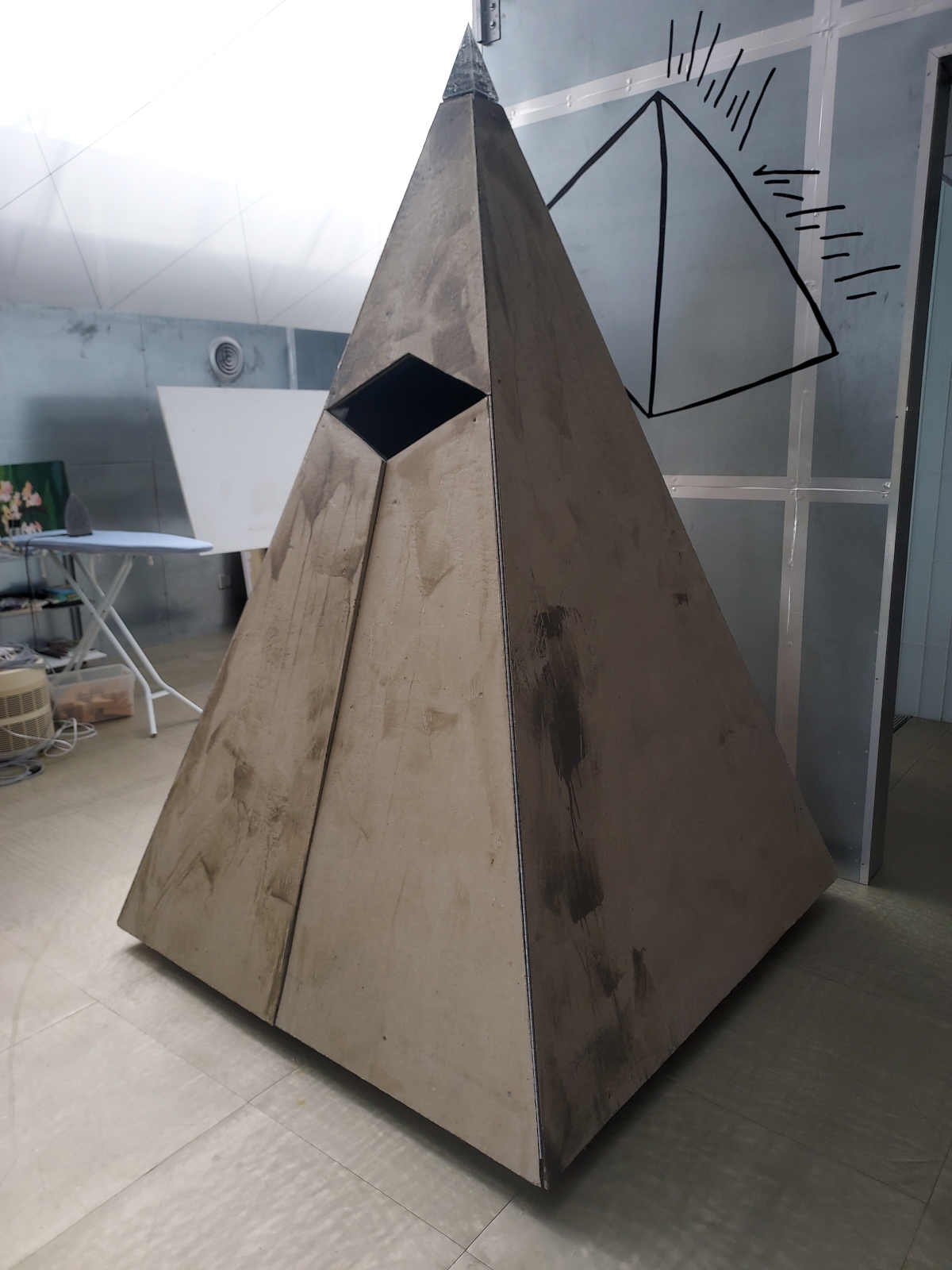
HUMAN ENVIRON RESEARCH STRUCTURES
EMPOWERED SENSORY PLACE
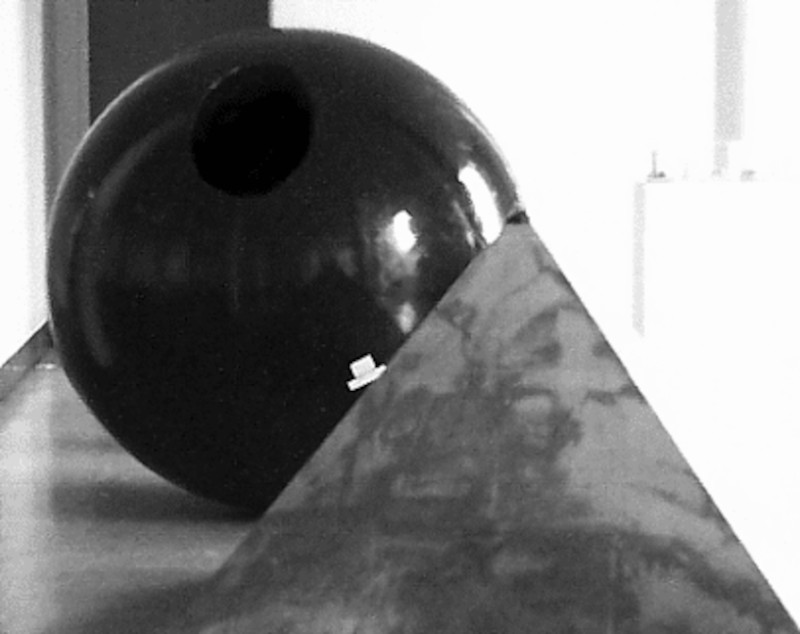
Pyramid Three Layer Accumulator
Galvanized steel and cellulose layers. Outside and inside.

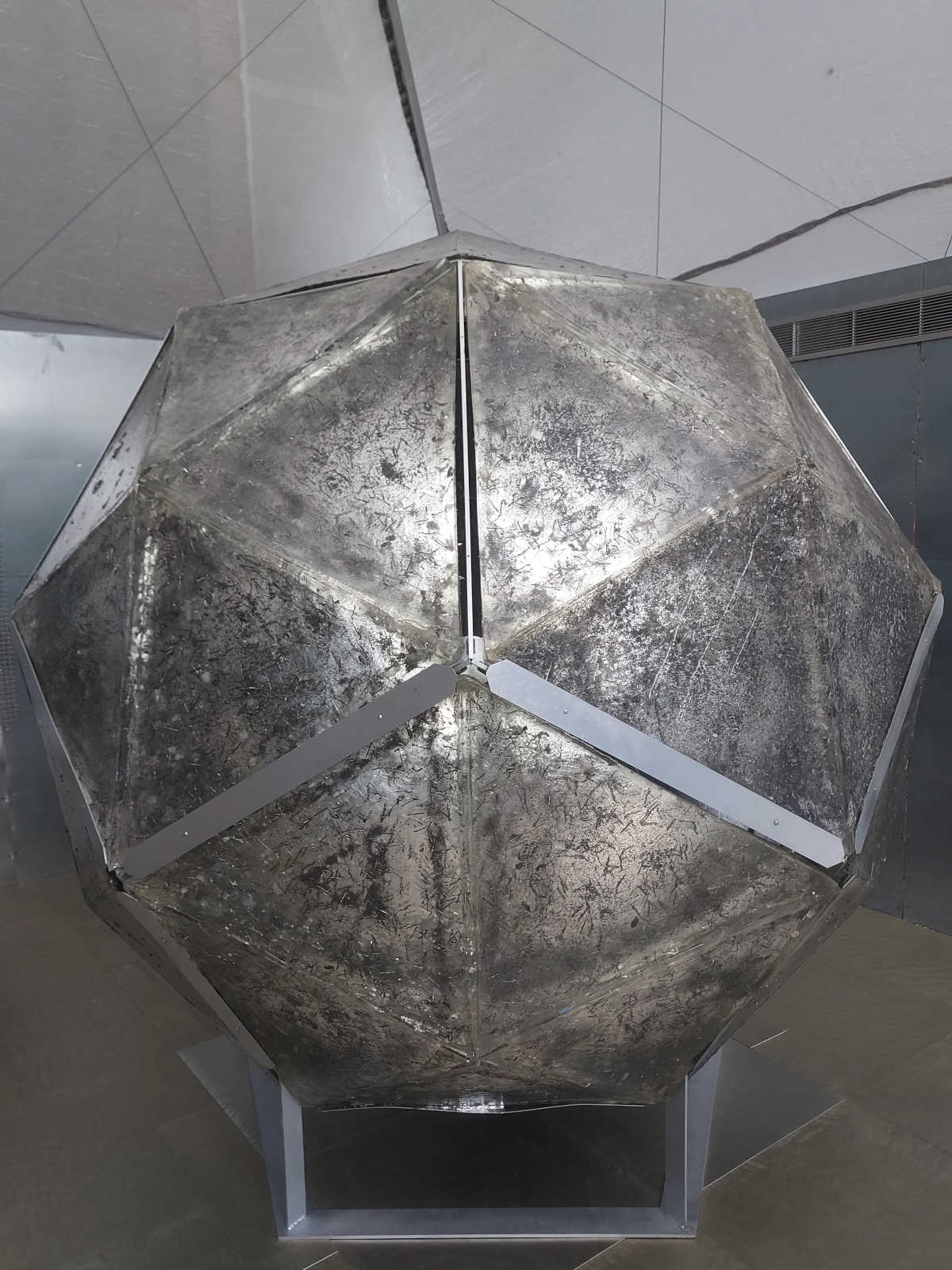
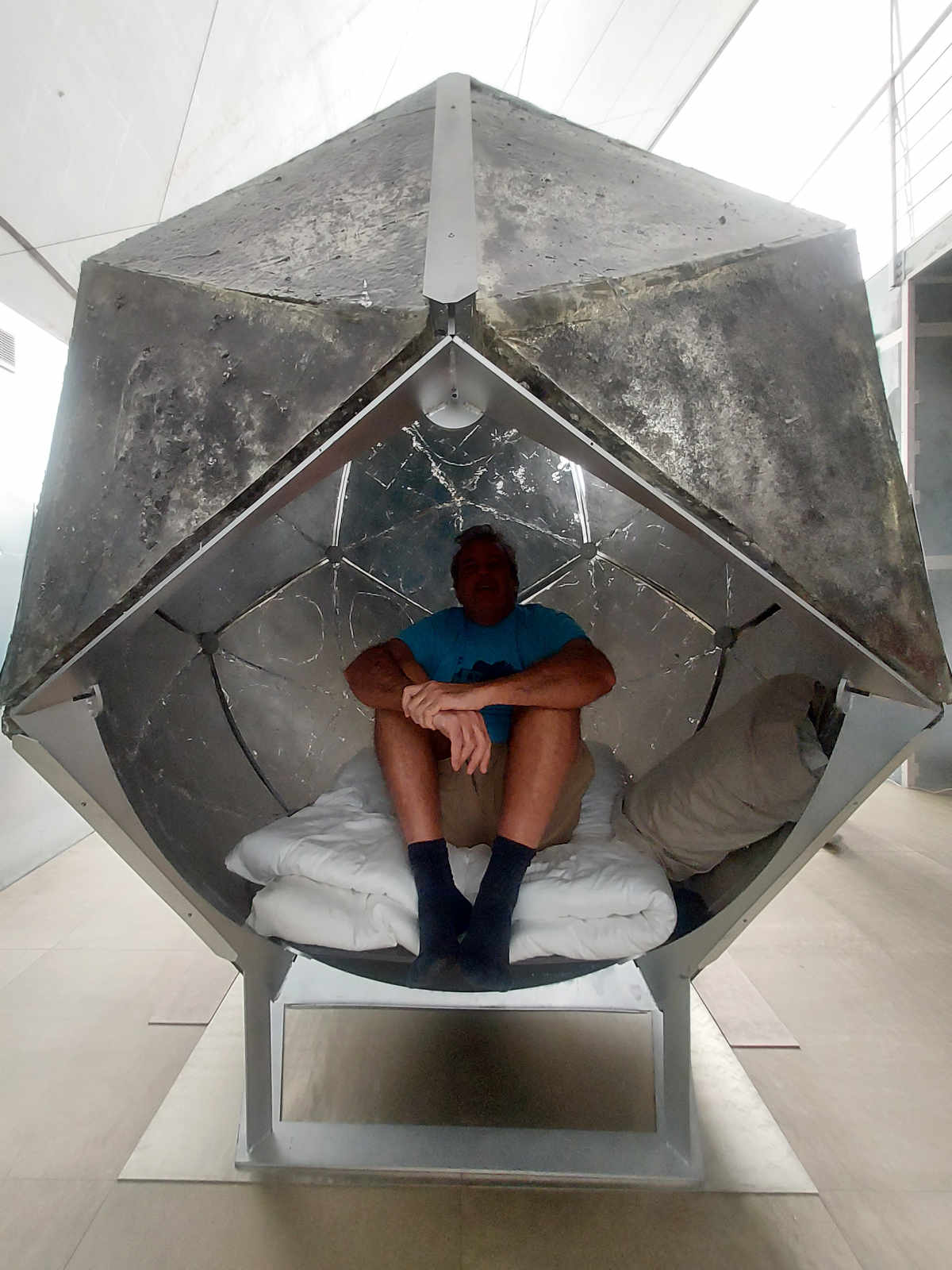
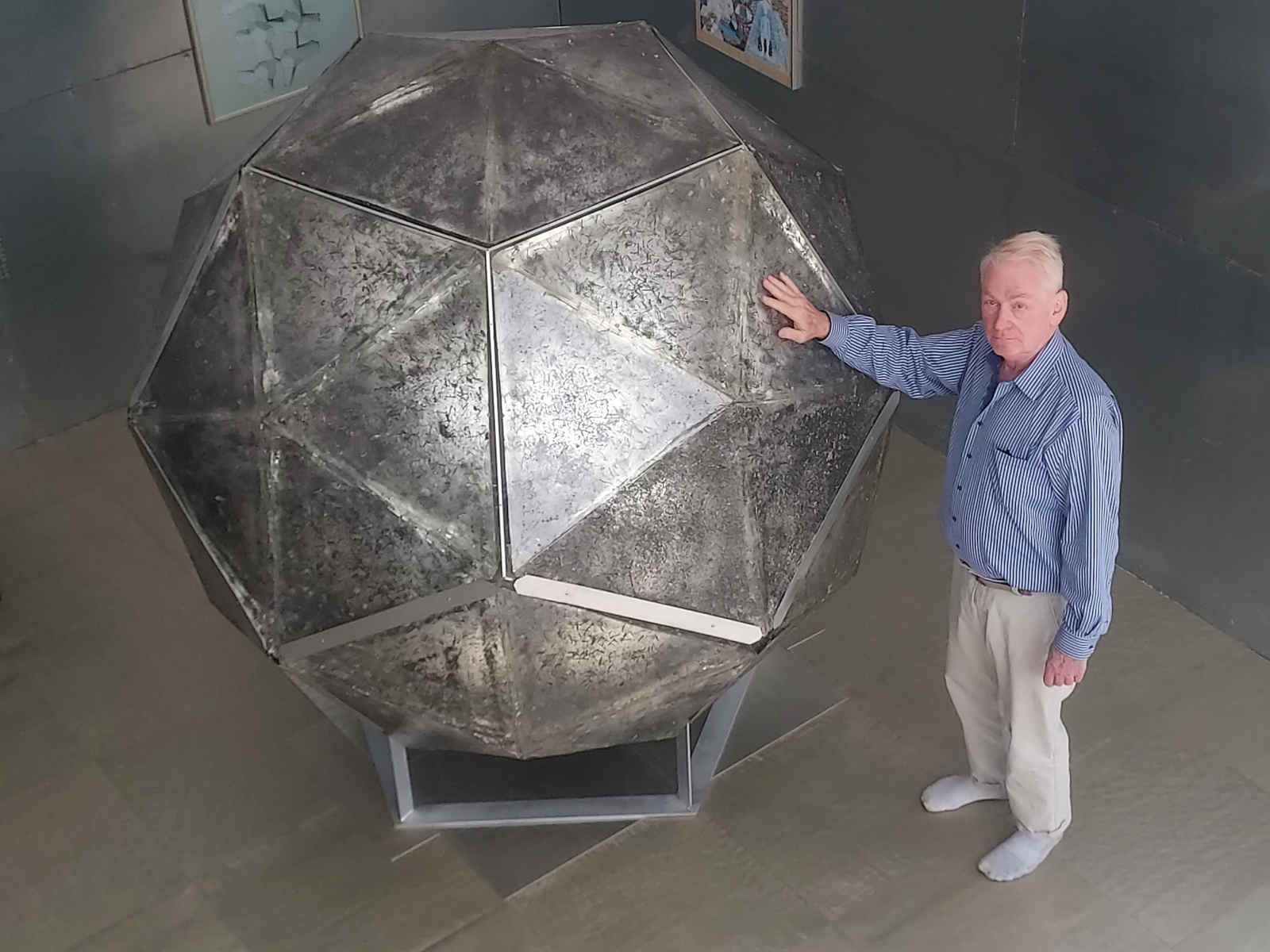
Orgonite Dodecahedron
Cast transparent concrete: Composed of quartz crystals and titanium turnings suspended in resin.
Set in a steel dodecahedron armature. Outside and inside.